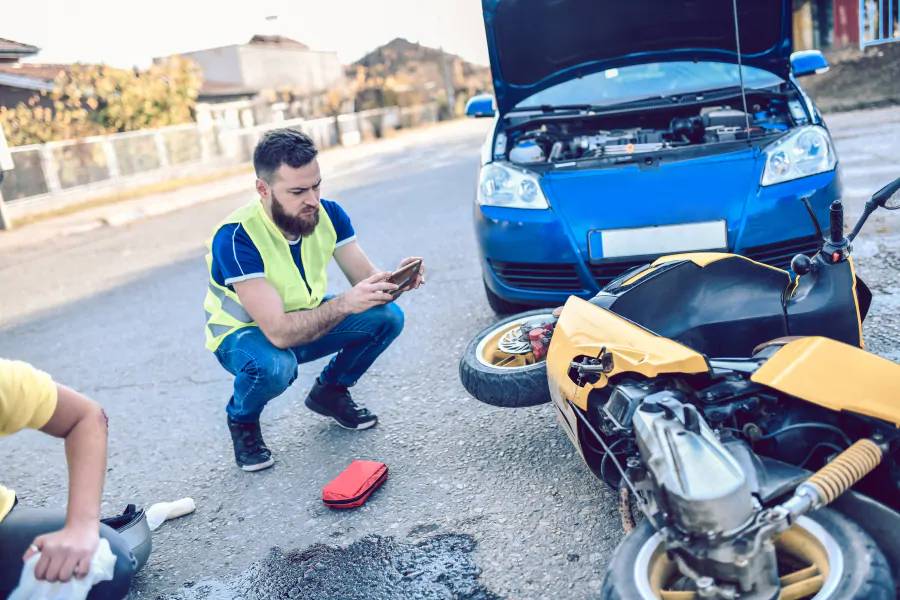
Fighting the assumption that the rider was at fault
Insurance adjusters, and sometimes jurors, start with a picture of motorcyclists as reckless. In practice, most serious crashes Paul M. Marriett sees involve a car or truck driver who failed to look: a left turn across the rider's path, a lane change into the bike, a driver pulling out of a side street or a parking spot. Paul counters the bias with evidence, including camera footage, the damage to the vehicles, skid and scrape marks, and, when needed, an accident reconstruction expert.
Where Chicago-area riders get hurt
- Left turns at city intersections, the most common serious collision for riders;
- Expressway lane changes on the Kennedy, Dan Ryan, and Edens, where a driver checks a mirror but not the blind spot;
- Rear-end crashes in stop-and-go traffic;
- Road hazards such as potholes, uneven pavement, and debris, which can raise a claim against whoever was responsible for the road;
- Car doors opened into traffic on crowded streets.
No helmet law in Illinois
Illinois does not require motorcycle helmets for riders of any age. The vehicle code requires eye protection unless the bike has a windshield (625 ILCS 5/11-1404). Not wearing a helmet doesn't take away your right to bring a claim. An insurer may argue it made a head injury worse, but that is a medical argument it has to prove, and it doesn't apply to injuries a helmet wouldn't have prevented.
Injuries riders suffer
Riders have no frame or airbags around them. Common injuries include broken legs, pelvises, and arms; road rash serious enough to need skin grafts; spinal injuries; and brain injuries, which can happen even with a helmet. Many of these injuries mean months of recovery and time away from work.
Fault and deadlines in Illinois
Under 735 ILCS 5/2-1116, a rider who was partly at fault, for example by going a few miles over the speed limit, can still recover as long as their share of the fault was 50% or less, with the award reduced by that share. Most claims must be filed within two years (735 ILCS 5/13-202). A claim can include medical care, lost income, pain and suffering, and damage to the bike and riding gear.
What a case costs
Cases like this are handled on a contingency-fee basis: no hourly bills, and the attorney fee comes out of any recovery. Clients may be responsible for litigation costs and expenses regardless of outcome. Paul M. Marriett explains exactly how that works, in writing, before you sign anything.
Frequently asked questions
I wasn't wearing a helmet. Can I still bring a claim?
Yes. Illinois has no motorcycle helmet law at any age, only an eye-protection rule (625 ILCS 5/11-1404). The insurer may argue a helmet would have reduced a head injury, but it has to prove that, and it does not affect other injuries.
The driver says they didn't see my motorcycle. Does that help them?
Usually it hurts them. Drivers have a duty to look for and yield to motorcycles like any other vehicle. "I didn't see him" often amounts to an admission that the driver wasn't paying attention.
What are the most common causes of motorcycle crashes?
Drivers turning left across a rider's path, drivers changing lanes into a motorcycle, rear-end crashes, and road hazards. Most involve another driver's failure to look.
Can I recover if I was partly at fault?
Yes, as long as your share of fault was not more than 50%. Illinois reduces your recovery by your percentage of fault (735 ILCS 5/2-1116).
Does my claim include my bike and gear?
Yes. Property damage to the motorcycle, helmet, and riding gear can be part of the claim along with medical bills, lost income, and pain and suffering.
What does it cost to hire Paul for a motorcycle crash?
Motorcycle cases are handled on a contingency fee: no hourly fees, and the attorney fee comes out of any recovery. Clients may be responsible for litigation costs regardless of outcome. Paul explains the fee and costs in writing before you sign.